
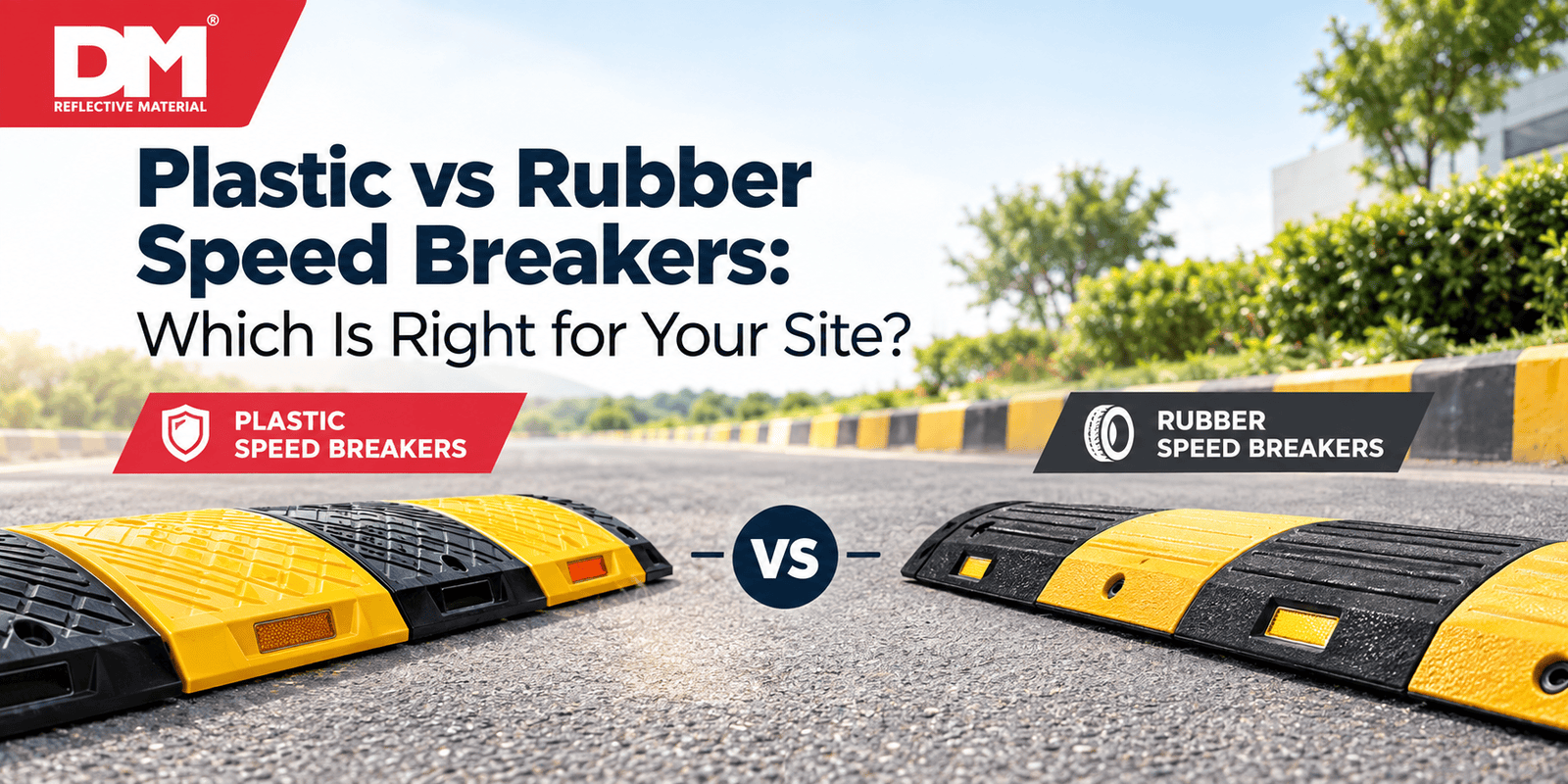
Speed breakers are one of the simplest, most effective ways to control vehicle speed on a site, but choosing the wrong material can mean early replacement, higher installation costs, or a breaker that doesn’t hold up to your actual traffic load. The plastic vs rubber speed breaker decision comes down to three things: how much traffic your site sees, what kind of vehicles use it, and your budget for upfront cost versus long-term durability. This guide breaks down both materials so you can specify the right speed bump for parking lots, residential streets, or high-traffic commercial sites.
Plastic speed breakers are typically molded from high-density polyethylene (HDPE) or similar UV-stabilized polymer, formed into modular sections that bolt directly onto the road surface. They’re the most common choice for sites that need a fast, budget-conscious install without heavy equipment.
Rubber speed breakers, usually made from recycled or virgin rubber compounds, are denser and more flexible than plastic. They’re the standard choice where vehicle weight, traffic volume, or climate extremes make durability the priority.
|
Factor |
Plastic Speed Breakers |
Rubber Speed Breakers |
|
Upfront Cost |
Generally lower per unit |
Higher per unit, especially for modular rubber sets |
|
Installation |
Lightweight, fast bolt-down installation, fewer crew hours |
Heavier, may need multiple installers or lifting equipment |
|
Durability (Heavy Traffic) |
Can crack or degrade under sustained heavy-axle loads |
Higher load tolerance, better suited to trucks and buses |
|
UV & Weather Resistance |
Good UV stability, can become brittle in extreme heat over years |
Excellent flexibility across temperature swings, resists cracking |
|
Noise/Vibration |
Slightly firmer ride-over, more audible impact |
Absorbs impact better, quieter, less harsh on vehicles |
|
Typical Lifespan |
3–5 years in moderate-traffic settings |
5–8+ years, especially in high-traffic or extreme climates |
|
Best Fit |
Parking lots, residential streets, low-to-moderate traffic sites |
Highways, industrial sites, high-traffic commercial entrances |
For most parking lots — retail centers, office parks, apartment complexes — traffic is predominantly passenger vehicles at low speed, which makes plastic the practical default. It installs quickly, costs less, and holds up well under the traffic profile a typical lot sees. Our ETEP Plastic Speed Breaker Type 1 is built specifically for this kind of site.
Residential roads share the same low-speed, passenger-vehicle-heavy profile as parking lots, so plastic breakers are usually sufficient — with the added benefit of quieter installation logistics in a neighborhood setting where heavy equipment isn’t welcome.
Anywhere trucks, buses, or heavy machinery regularly cross — industrial yards, weigh station approaches, highway maintenance zones — rubber is the stronger long-term choice. The higher load tolerance and longer lifespan generally justify the added cost when heavy vehicles are part of daily traffic.
Sites with constant vehicle turnover, like distribution centers or busy commercial driveways, benefit from rubber’s durability even without heavy trucks, simply because the breaker is absorbing far more total impact cycles over its life.
Speed breaker price depends on more than just plastic vs rubber. When budgeting for a project, factor in:
Occasional truck traffic is generally fine for a well-made plastic breaker, but if trucks or buses are a regular, daily part of your site’s traffic, rubber will hold up longer and require less frequent replacement.
Rubber units typically carry a higher per-unit price, but the gap narrows when you factor in plastic’s shorter replacement cycle under heavy use — over a 5-8 year period, rubber can work out to a similar or lower total cost on high-traffic sites.
Plastic is generally faster and easier to install because the modular sections are lighter and require less crew or equipment. Rubber sections, especially larger profiles, may need more installers or basic lifting support.
Speed breaker price depends on site length, profile height, and order volume, so the most accurate number comes from a quick site spec. Reach out to our team with your lane width and traffic type, and we’ll put together pricing for both plastic and rubber options.
Still deciding between plastic and rubber? The right call usually comes down to your site’s traffic mix and how long you need the installation to last. Browse the ETEP Plastic Speed Breaker Type 1 for a parking lot or residential-ready option, or
contact our team for a quote — send us your site’s traffic type and lane width, and we’ll recommend the right material and put together speed breaker pricing tailored to your project.