
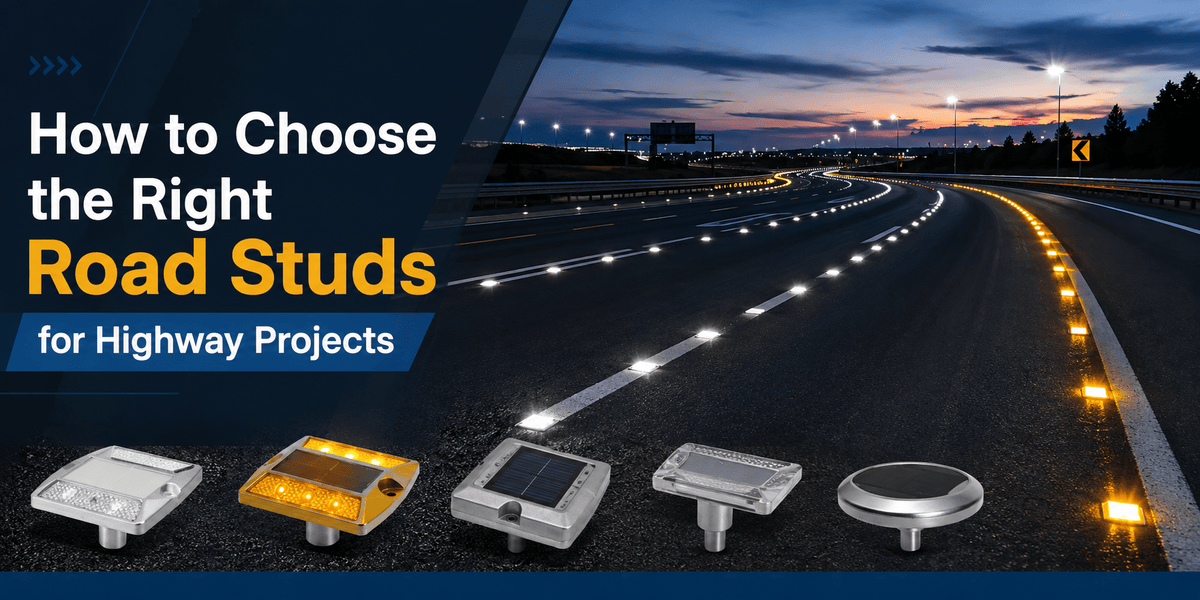
Highway procurement teams have a lot riding on one small decision: which road studs to specify for a project. The right choice keeps drivers safe in poor visibility and holds up under years of heavy traffic. The wrong choice means early replacement, maintenance headaches, and gaps in visibility exactly when they matter most.
This guide walks through how to choose road studs for highways, covering the factors that actually affect performance: power source, mounting method, visibility rating, and durability under load. It ends with a short checklist you can use before requesting a quote.
The first decision is whether you need solar road studs or standard reflective road studs (sometimes called cat eye road studs because of how they catch headlight beams).
Reflective road studs use embedded glass or acrylic lenses to bounce vehicle headlights back at the driver. They need no power source, no wiring, and almost no maintenance beyond keeping the lens surface clean. This makes them the standard choice for most highway lane markings, edge lines, and pedestrian crossings.
Solar road studs contain an LED and a small solar cell that charges during the day and powers a flashing or steady light at night. They cost more upfront and need periodic battery checks, but they stay visible even when headlights aren’t hitting them directly. This matters on curves, intersections, off-ramps, and any stretch where drivers approach at an angle.
A simple way to decide: use reflective studs for straight, high-visibility stretches where headlight angle is predictable. Use solar studs where geometry works against passive reflection, such as tight curves, roundabouts, or unlit rural roads.
How a stud attaches to the road surface affects both installation cost and long-term performance.
For new construction or full resurfacing projects, recessed mounting is worth the extra step if the region sees snow removal equipment. For retrofits on existing roads, surface mounting is usually the practical choice.
Not all road studs deliver the same visibility distance, and this is where procurement teams should ask suppliers for actual test data rather than marketing claims.
Look for:
Ask your supplier for the specific test method and conditions behind any visibility figures they quote. A number without context (test distance, weather condition, angle) isn’t useful for comparison between products.
Highway studs face constant compression from vehicle tires, plus exposure to heat, UV, and in many regions, snowplow contact. Materials matter here:
Match the material to the traffic volume and climate of the project. A rural secondary road and a busy highway interchange don’t need the same spec, and overpaying for heavy-duty studs on a low-traffic road is as much a planning miss as underspecifying for a highway.
Road studs handle lane and edge marking at road level, but many highway projects also need vertical visibility cues, especially on curves, medians, and construction zones. This is where delineator posts come in. They give drivers a taller, more visible reference point at night or in fog, working alongside road studs rather than replacing them. A complete visibility plan for a highway project usually specifies both.
Before requesting a quote, confirm the following:
Working through this list before you contact suppliers makes it easier to compare quotes on equal terms, since you’re asking every vendor for the same specification rather than letting each one define the terms.
DM Road Safety supplies reflective and aluminum road studs built for highway-grade traffic loads, along with delineator posts and other visibility products for highway and municipal projects. Browse the full range of road safety products or contact our team to get a quote suited to your project’s traffic conditions and climate.